What a School Floor Tells Visitors Before Anyone Speaks
The surface under a visitor's feet makes the first impression of your building, and it follows a care cycle you can learn to judge.
October 20, 2026 · 4 min read
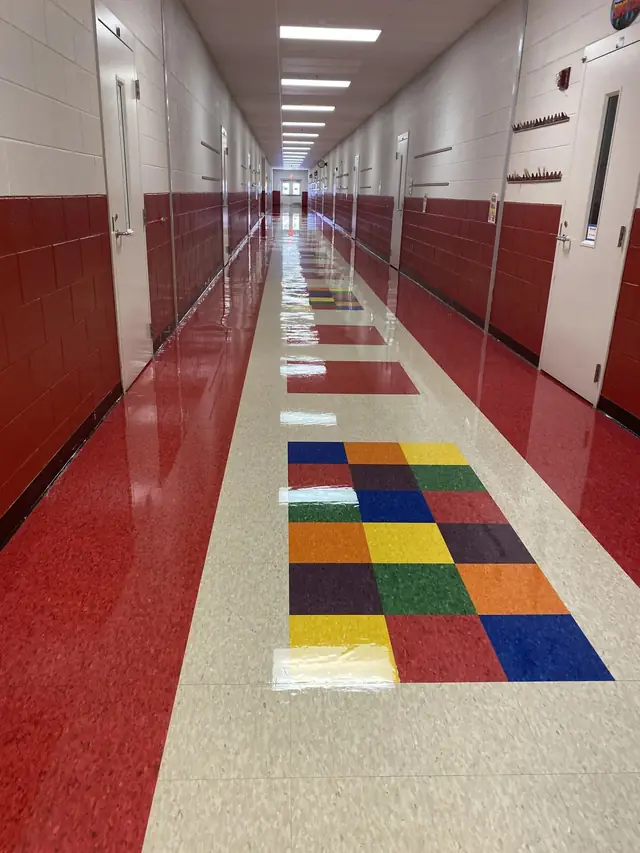
Walk into a school and the first thing you read is the floor. Before you meet anyone in the front office, before you see a trophy case or hear a bell, your eyes settle on the surface under your feet. A hall with an even, glossy finish tells you someone is paying attention. A hall with gray traffic lanes, scuffed corners and a dull film along the baseboards tells you something else, whether or not anyone meant it to.
That's the idea behind ParCou's tagline, Your floor tells a story. Parents touring a campus, a visiting superintendent, a new teacher on a first day: all of them form an impression in the first few steps, and the floor does most of the talking. This article looks at what that impression is made of and what it takes to keep it accurate, with a focus on the vinyl tile that covers so many school corridors, cafeterias and gyms in the Greater Memphis Area.
Why the floor gets read first
Floors are the largest continuous surface in any school building. They're also the surface that takes the most abuse. Hundreds of shoes cross a main hallway every day, and each pair carries in grit, moisture and whatever else was on the sidewalk or the bus step.
Visitors don't analyze any of this. They just register it. A bright, even floor reads as a building that's cared for, and people extend that assumption to the things they can't see, like how the restrooms are kept or whether the kitchen is clean. A neglected floor works the same way in reverse.
What the shine is actually doing
On a vinyl composition tile floor, the gloss you see usually isn't the tile itself. It's a layer of floor finish, applied in thin coats over the bare tile. That layer is a sacrificial coating. Its job is to take the scuffs and abrasion so the tile underneath doesn't, and to make daily cleaning easier because dirt sits on a smooth surface instead of working into the pores of the tile.
When the finish is healthy, a dust mop picks up most of what's on the floor and a damp mop takes care of the rest. When the finish wears through in the traffic lanes, dirt gets pressed into the exposed tile, and the floor starts to look gray no matter how often it's mopped.
The cycle behind a good tile floor
Floor care in a school isn't a single task. It's a cycle with different steps at different intervals. In general practice it looks something like this:
- Daily: dust mopping to remove grit before it gets ground into the finish, followed by damp mopping with a cleaner suited to finished floors.
- Regular: machine scrubbing to lift the film that daily mopping leaves behind, especially in cafeterias and at entrances.
- Periodic: burnishing with a high speed machine to bring back gloss on a finish that's still in good shape, or a fresh coat or two of finish where the shine has worn thin.
- As needed: stripping the old finish completely once it has yellowed, built up or trapped dirt, then rinsing, drying and applying new coats.
How often each step happens depends on traffic, weather, the type of tile and the finish in use, so nobody can hand you a universal schedule. A main entrance corridor and a rarely used storage hallway should not be on the same calendar.
Where floors fail first
Most floor problems begin in the same few places. Entrances take the first hit from outside grit and water. Cafeterias take spills, food residue and heavy chair traffic. Corners and edges are missed by wide machines and slowly collect a ridge of old finish and dirt. Doorway thresholds between rooms see the most foot traffic per square foot.
Stripping is also where shortcuts show. Finish applied over a floor that wasn't fully stripped and rinsed can look cloudy or streaky, and finish applied too thick, or without enough drying time between coats, can do the same. A crew that understands these details will tell you when a floor needs a full strip rather than another coat on top.
A simple way to judge your own floors
You don't need equipment to get a quick read on your floors. Try this on your next walk through the building:
- Stand at the far end of a long hallway and look back along the floor toward a window. Gloss should look even, with no dull stripes down the middle.
- Check the corners and the strip along the baseboards. A dark outline there means finish and dirt have been building up for a while.
- Look at the entrance and the cafeteria separately from the classrooms. If those two look tired, the cleaning plan probably treats every area alike.
If a couple of those checks fail, the floor care cycle probably has a gap, and gaps can be closed.
How ParCou thinks about school floors
ParCou was founded in 2014 by Jerry Parker and Mark "Gopher" Coulter, who between them have overseen facility services across 33 school districts in 3 states. The company serves educational institutions and other facilities in the Greater Memphis Area, and its technicians are trained and insured and work with modern sanitization equipment. The tagline says it plainly: a floor is part of how a school presents itself, and it's worth treating that way.
If you'd like a second opinion on how your floors look and what a care cycle for your building might include, call ParCou at 901-504-9150 and ask for a free assessment.
ParCou LLC, 901-504-9150
Call 901-504-9150More articles
When a Dirty Room Pulls Students' Attention Away
Students notice the state of their building more than most adults assume, and a cleaning plan can be built around that.
How to Compare Janitorial Quotes for a School or Large Facility
Three quotes that look nothing alike usually describe three different jobs, and one shared scope fixes that.