Why a Large Building Needs Both Janitorial Services and Facility Maintenance
The two terms get used interchangeably, but they answer different questions, and the gaps between them are where problems hide.
October 20, 2026 · 4 min read
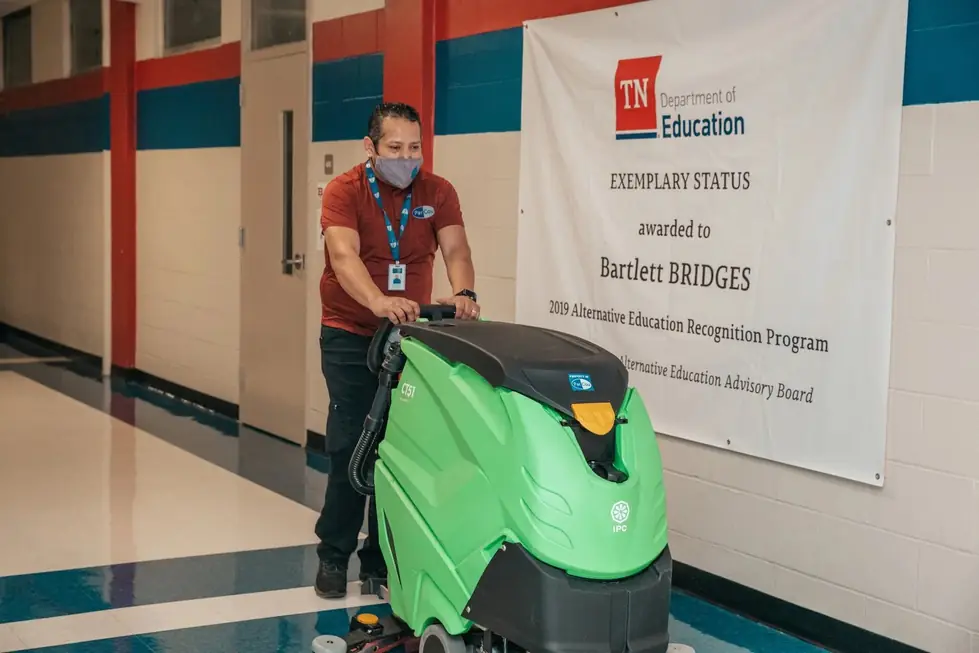
Facility managers often hear the words janitorial and maintenance used as if they mean the same thing. They overlap, and a few tasks sit right on the line between them, but they answer different questions. Janitorial work asks whether the building is clean today. Maintenance work asks whether the building will still look and function the way it should next year.
In a school or large facility you need both questions answered. This article lays out what each usually covers, where the gray areas are, and how to talk to a provider so nothing falls into the gap between the two.
What janitorial services typically cover
Janitorial work, sometimes called custodial work, is the recurring daily and weekly effort of keeping a building clean and usable. In general practice that includes:
- Emptying trash and recycling and replacing liners.
- Cleaning and restocking restrooms.
- Dust mopping, damp mopping and vacuuming floors.
- Wiping desks, counters, handrails, door handles and other high-touch surfaces.
- Cleaning glass at entrances and on interior doors.
- Spot cleaning spills, and resetting cafeterias and common areas.
ParCou's janitorial page frames the benefits this way: improve the learning or working environment, minimize contributors to asthma and allergies, boost a sense of pride with your affiliation, and send the right message to all who enter. Those are the results of consistent daily work, not one-time events.
What facility maintenance adds
ParCou's facility maintenance copy says that keeping a facility clean is essential and that creating a clean and safe environment is a responsibility the company takes seriously. It describes the aim as taking the struggle out of maintaining your space. The exact scope of maintenance varies from one provider and one agreement to the next, so it's worth spelling out. In general, maintenance covers the upkeep that protects surfaces and the building over time, rather than the daily reset. Not every provider offers every item, but a typical list looks like this:
- Floor restoration, such as stripping and refinishing vinyl tile on a planned schedule.
- Deep cleaning of carpet and upholstery.
- High dusting, vents and fixtures that daily rounds don't reach.
- Entrance areas and exterior glass.
- Noticing small problems during rounds, like a loose threshold or a stained ceiling tile, and reporting them to the right person.
Where the line blurs
Floor care is the clearest example. Daily mopping is janitorial. Stripping and refinishing is closer to maintenance, but if the same crew does both, the agreement may lump them together. Carpet is similar: vacuuming happens daily, extraction happens periodically. Restroom deep cleans, grout and fixture descaling, and the area around cafeteria equipment also sit in the gray zone.
The risk isn't that something gets classified wrong. The risk is that nobody is assigned. A facility manager believes the cleaners handle it, and the cleaners believe it's outside their scope. Months later the problem is obvious and everyone is surprised.
Why a large building needs both
Daily cleaning without maintenance is like changing the oil without ever replacing the tires. The building looks fine in the morning and wears faster than it should. A floor that's only mopped, and never refinished, will wear through its finish in the traffic lanes. Carpet that's only vacuumed holds onto what the vacuum can't reach.
Maintenance without daily cleaning has the opposite problem. A freshly stripped and refinished floor looks excellent for a while and then loses ground if the daily routine isn't there to protect it. Periodic work gets its value from the daily work that follows it.
For a school, the calendar adds a third reason. Heavy periodic work is easier to schedule during breaks and summer, when rooms are empty, than during the school year. A plan that treats the two as one calendar can place the deeper work where it disrupts the fewest people.
How to write it into your agreement
- List daily tasks by area and frequency.
- List periodic tasks separately, with the number of times a year each one happens.
- State which periodic tasks happen during breaks or summer.
- Name who reports problems that fall outside cleaning, and to whom.
- Decide how extra requests are handled and approved.
Then ask a provider to describe a typical year for your building, month by month. If the answer is only about what happens each night, the periodic work may not be planned at all.
Working with one provider
Having one team handle both has practical benefits. The people doing the periodic work know the daily routine, and the people doing the daily routine know what the periodic work is protecting. There's also one contact to call when something needs attention.
ParCou provides janitorial services and facility maintenance for educational institutions and facilities in the Greater Memphis Area, and for many facilities across Western Tennessee. Its founders came from facility service operations, including senior and regional managerial positions overseeing 33 school districts across 3 states, and that background is what they bring to scoping a school building.
To talk through what your building needs, call ParCou at 901-504-9150 or ask for a free assessment.
ParCou LLC, 901-504-9150
Call 901-504-9150More articles
What a School Floor Tells Visitors Before Anyone Speaks
The surface under a visitor's feet makes the first impression of your building, and it follows a care cycle you can learn to judge.
When a Dirty Room Pulls Students' Attention Away
Students notice the state of their building more than most adults assume, and a cleaning plan can be built around that.